Choosing flooring for a Tulsa home involves more than finding a color that looks good under showroom lighting. A kitchen, hallway, bedroom, and basement all face different daily conditions, so the most successful projects match the flooring to the room’s actual use. Homeowners comparing finishes and formats can start with this ceramic tile buying guide for Tulsa homeowners when considering durable surfaces for kitchens, baths, entries, and other hardworking areas.
The goal is not to use the most expensive option everywhere. It is to choose materials that fit your household, from muddy shoes at the entry to a quiet home office or a busy family room. Begin with function, then narrow the choices based on appearance, budget, and long-term upkeep.
Why Flooring Choices Should Vary by Room
Every room creates its own combination of demands. Bathrooms and laundry rooms face standing water and humidity. Kitchens deal with spills, dropped cookware, chair movement, and frequent cleaning. Bedrooms benefit from warmth and quiet, while entries and hallways need surfaces that can handle grit and repeated traffic.
Before selecting a finish, consider moisture exposure, sunlight, children and pets, furniture weight, cleaning routines, and whether the room needs a soft or firm surface. Independent comparisons such as room-by-room flooring tests are useful because they evaluate materials for issues such as wear, dents, water resistance, and fading.
Step One: Assess How Your Household Uses Each Space
- Estimate how many people use the room on a typical day.
- Identify regular sources of water, dirt, food, pet activity, or rolling furniture.
- Decide whether comfort and sound control matter more than easy cleanup.
- Consider future needs, including children, pets, aging in place, or a room changing purpose.
A guest room may need a calm, comfortable surface with modest durability, while an entry needs a finish that tolerates shoes, moisture, and repeated cleaning. This practical assessment should happen before comparing plank colors or tile patterns.
Best Flooring for Kitchens and Mudrooms
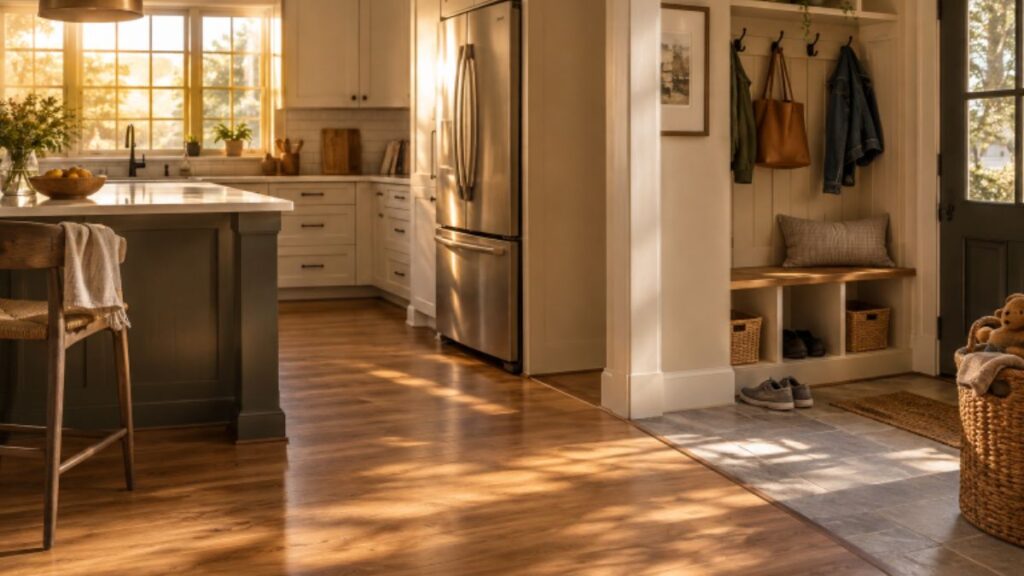
Kitchens and mudrooms are among the hardest-working spaces in many Tulsa homes. Porcelain tile, luxury vinyl, sheet vinyl, and some laminate products are common options, but each has trade-offs.
- Porcelain tile offers a durable, moisture-resistant surface and works well where grit and spills are common. It can feel hard or cool underfoot, and grout requires routine care.
- Luxury vinyl provides a resilient surface, broad design variety, and easier replacement of damaged planks or tiles in many installations.
- Sheet vinyl can minimize seams across a small room, which can be useful where water exposure is a concern.
- Laminate can create a wood-look floor at a lower starting cost, but it should be chosen only when the product is rated for the room and moisture is controlled.
In these areas, favor textured or appropriately rated surfaces over highly polished finishes, and plan transition strips where flooring meets adjoining rooms.
Best Flooring for Bathrooms and Laundry Rooms
Bathrooms and laundry rooms need careful attention to seams, edges, plumbing connections, and transitions. Porcelain tile and vinyl are frequent choices because they tolerate routine splashes better than many wood-based products. A textured tile or less glossy finish may also provide more traction when wet.
Water can reach the subfloor through weak edges or failed caulk even if the top surface resists moisture. Check product instructions closely before installing wood-look laminate or engineered products in rooms with frequent water exposure.
Best Flooring for Living Rooms, Dining Rooms, and Family Rooms
These rooms balance appearance with daily comfort. Solid hardwood and engineered wood bring natural warmth, while luxury vinyl and laminate offer alternatives for households concerned about routine spills, pets, or changing design preferences. Low-pile or patterned carpet can also work in family rooms where softness and sound absorption are priorities.
Consider how the surface will show real life. Matte finishes, visible grain, color variation, and gentle texture can make small marks and dust less noticeable than a very smooth, uniform, glossy floor. Use furniture pads under heavy pieces regardless of material.
Best Flooring for Bedrooms and Home Offices
Bedrooms usually call for comfort, warmth, and reduced noise. Carpet remains a practical option for softness underfoot, while hardwood, engineered wood, cork, and luxury vinyl can create a cleaner hard-surface look. Area rugs give hard-floor bedrooms added comfort without permanently covering the entire room.
For a home office, account for rolling desk chairs and concentrated furniture weight. A chair mat can protect many surfaces, and a low-pile carpet or firm hard floor generally allows casters to move more easily than a thick, plush carpet.
Best Flooring for Basements and Below-Grade Rooms
Start with the concrete, not the sample board. Below-grade rooms should be checked for moisture, seepage, cracks, and drainage problems before flooring is selected. The control of moisture inside the home matters because water can enter through leaks, seep through foundation areas, or build up from indoor humidity.
Vinyl, porcelain tile, and products specifically rated for below-grade installation are common basement choices. Some engineered wood and laminate products may be suitable when manufacturer requirements are met. A floating-floor system and correct underlayment can help accommodate normal movement, but they do not solve an active water problem. Repair leaks or drainage concerns first.
How to Create a Consistent Look Without One Material Everywhere
A Tulsa home can feel cohesive even when bathrooms use tile, bedrooms use carpet, and living areas use wood or vinyl plank. Repeat related undertones, such as warm oak, soft greige, or charcoal accents, instead of forcing identical surfaces throughout the house. Plan transitions early, especially in open layouts, and use changes in plank direction, tile layout, or area rugs to define separate zones intentionally.
Flooring Materials at a Glance
- Hardwood: Best for dry living rooms, dining rooms, and bedrooms. It offers a warm appearance and may be refinished, but moisture and dents require attention.
- Engineered wood: Suitable for many dry living areas and some approved concrete subfloors. Verify the wear layer and refinishing limits.
- Luxury vinyl: A strong candidate for kitchens, baths, basements, and active households. Product quality and subfloor smoothness can affect the final result.
- Porcelain tile: Well suited to bathrooms, kitchens, entries, and mudrooms. It is durable but hard underfoot and can crack from a heavy impact.
- Laminate: Useful in appropriate dry or moisture-managed spaces. Follow the manufacturer’s water and installation guidance.
- Carpet: Comfortable for bedrooms, offices, and family rooms, but less suitable where moisture, stains, or tracked-in debris are routine concerns.
Questions to Ask Before Buying and Installing
- Is this product rated for the room, subfloor, and installation method?
- How does it handle water, scratches, dents, and direct sunlight?
- Can an individual plank, tile, or section be repaired or replaced?
- What cleaning products and tools are approved?
- Does the material require acclimation, adhesive, underlayment, or a moisture barrier?
- Does the budget include removal, preparation, trim, transitions, delivery, and installation?
Common Flooring Mistakes to Avoid
Do not choose solely from an online photo or a small showroom display. Bring samples home and view them beside cabinets, trim, paint, and furniture in morning and evening light. Avoid ignoring subfloor conditions until installation day, buying too little material for future repairs, or assuming a waterproof surface makes the entire room waterproof.
Conclusion
The best flooring for a Tulsa, Oklahoma home is the material that fits the room, the household, and the maintenance plan. By evaluating moisture, traffic, comfort, subfloor conditions, and visual flow room by room, homeowners can create floors that look connected, work hard where needed, and remain practical long after the renovation is complete.