Wildlife problems are often easier and less expensive to prevent than to repair after animals have settled into an attic, garage, or crawl space. A practical prevention plan starts with identifying small openings, reducing attractants, and acting before scratching sounds, odors, or property damage become a larger concern. If an animal has already left behind waste or damaged insulation, professional sanitization after wildlife removal Sacramento, CA can help restore the affected area safely.
Most animals are not trying to cause damage. They are looking for food, water, shade, warmth, or a protected place to nest. By making the home less accessible and the yard less inviting, homeowners can reduce conflicts while using humane methods that avoid trapping animals inside.
Why Wildlife Enters Homes
Wildlife entry usually begins with a weak point in the structure, not random behavior. A loose roof vent, worn garage-door seal, uncapped chimney, broken screen, or gap around plumbing can provide access to a quiet indoor space. Once an animal finds reliable shelter, it may return repeatedly or create a nesting site for young.
Common attractants include accessible garbage, spilled birdseed, outdoor pet food, dripping faucets, dense vegetation, and branches that touch the roof. Small animals can use these resources while larger animals may be drawn to the same yard by scent, cover, and easy access.
Early Warning Signs To Watch For
Animals are not always seen right away, so early clues matter. Listen for scratching, thumping, chirping, or rustling in ceilings and walls. Look for droppings near storage boxes, vents, doors, or utility areas. Shredded paper, insulation, leaves, and fabric can indicate nesting activity.
Other warning signs include chewed wood or wiring, greasy rub marks near openings, strong odors in enclosed spaces, damaged weather stripping, and freshly disturbed soil around a foundation. Make a note of where and when the activity occurs. That information can help identify the likely entry route without needing to handle waste or approach an animal.
How To Check An Attic
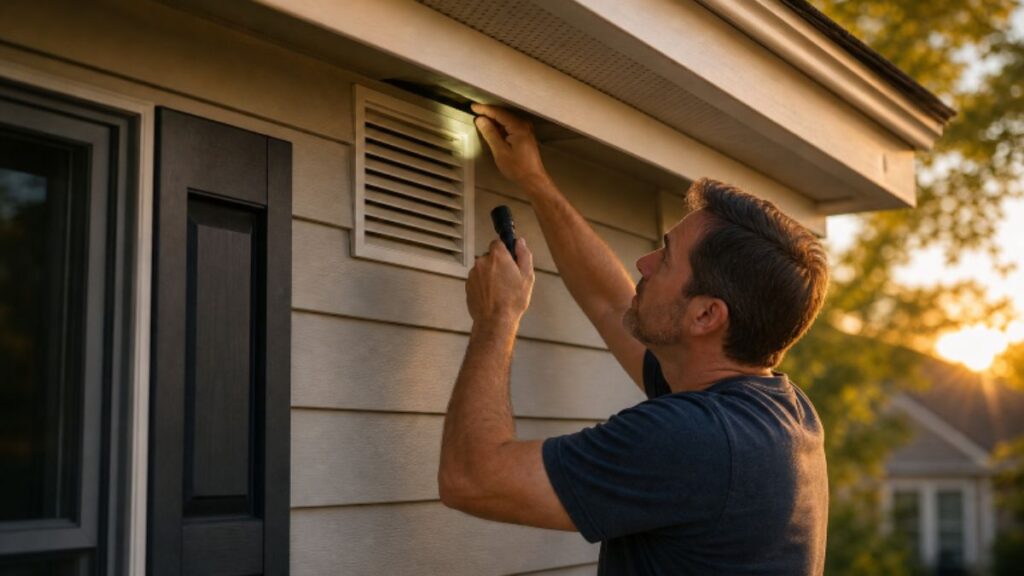
Begin outside whenever possible. From the ground, inspect roof edges, soffits, fascia boards, vents, and chimney areas for loose materials or visible gaps. Inside the attic, look for daylight, flattened insulation, tunnels, stains, droppings, and nesting materials. Listen at different times of day because some wildlife is active mainly at night.
Do not enter an unstable attic or touch droppings without appropriate protective equipment. More importantly, do not seal an opening as soon as it is found. An adult animal, or dependent young, may still be inside. Closing the gap too early can trap wildlife in the structure and make the problem worse.
How To Secure A Garage
Garages offer shelter, darkness, and cluttered corners that appeal to rodents and other small animals. Keep the main door closed when it is not in use, replace worn bottom seals, repair windows and screens, and check utility openings along walls and ceilings. Store pet food, birdseed, grass seed, and garden products in hard-sided containers with secure lids.
For example, a garage door left open during the evening can give a mouse or squirrel access to a quiet storage area. Even after the door is closed, a soft or torn weather seal may allow the animal to return. Removing clutter and repairing the seal can eliminate both the hiding place and the route inside.
How To Protect A Crawl Space
Crawl spaces are easy to overlook because damage can remain hidden for weeks. Inspect access doors, foundation vents, pipe openings, cable penetrations, and areas beneath decks or porches. Look for tracks, odors, droppings, torn insulation, disturbed vapor barriers, or soil that appears recently moved.
- Install durable screening over vents without blocking needed airflow.
- Repair warped access doors and make sure they close securely.
- Seal gaps around pipes, cables, and foundation penetrations.
- Keep mulch, vines, and dense plant growth away from foundation walls.
- Remove materials stored against the house that create hidden cover.
Remove Food, Water, And Shelter Sources
Daily habits can unintentionally make a property attractive. Use tight-fitting trash and compost lids, bring pet food and water indoors overnight, clean fallen fruit and spilled birdseed, and wash outdoor grills after use. Repair dripping faucets and irrigation leaks so wildlife does not have a dependable water source near the home.
Trim branches away from the roof, move firewood away from exterior walls, and remove brush piles, loose lumber, and unused yard materials. These steps reduce the sheltered pathways that animals use while moving around the property.
Use Humane Prevention Methods
Prevention means reducing conditions that attract wildlife. Exclusion means blocking access after confirming animals are out. Removal addresses an animal already inside. The most effective approach uses all three in the right order: locate entry points, determine whether animals or young are present, allow a safe exit when appropriate, then make durable repairs.
A humane exclusion approach emphasizes sealing cracks and gaps only after animals have left, while also reducing food and shelter sources. Avoid poison, glue traps, and improvised trapping methods. These options can harm pets and unintended wildlife, create odor problems inside walls, and fail to address the original entry point.
When To Seek Professional Help
Professional assistance is the safer choice when an animal may be trapped in a wall, attic, or crawl space, when young animals could be present, or when bats, raccoons, or other higher-risk wildlife are involved. Help is also appropriate if contaminated insulation, damaged wiring, roof damage, or hard-to-reach openings are present.
A trained wildlife professional can inspect the structure, identify entry routes, recommend humane exclusion steps, and help prevent repeat access without putting people or animals at unnecessary risk.
A Simple Seasonal Prevention Plan
Spring
- Check vents, soffits, chimney openings, and screens before nesting activity increases.
- Trim branches near the roof and repair winter storm damage.
Summer
- Secure trash, pet food, birdseed, and outdoor water sources.
- Inspect garages, sheds, crawl spaces, and shaded storage areas.
Fall
- Seal confirmed empty entry points before colder weather arrives.
- Clean gutters and repair soft fascia boards, loose vents, and damaged door seals.
Winter
- Watch for new noises after storms, high winds, or sharp temperature changes.
- Keep garage doors closed and inspect indoor storage spaces regularly.
Final Takeaway
Regular inspections, fewer outdoor attractants, timely repairs, and humane exclusion create the strongest wildlife prevention plan. A brief monthly walk around the home can reveal loose screens, small gaps, or food sources before they turn into a costly indoor wildlife problem.