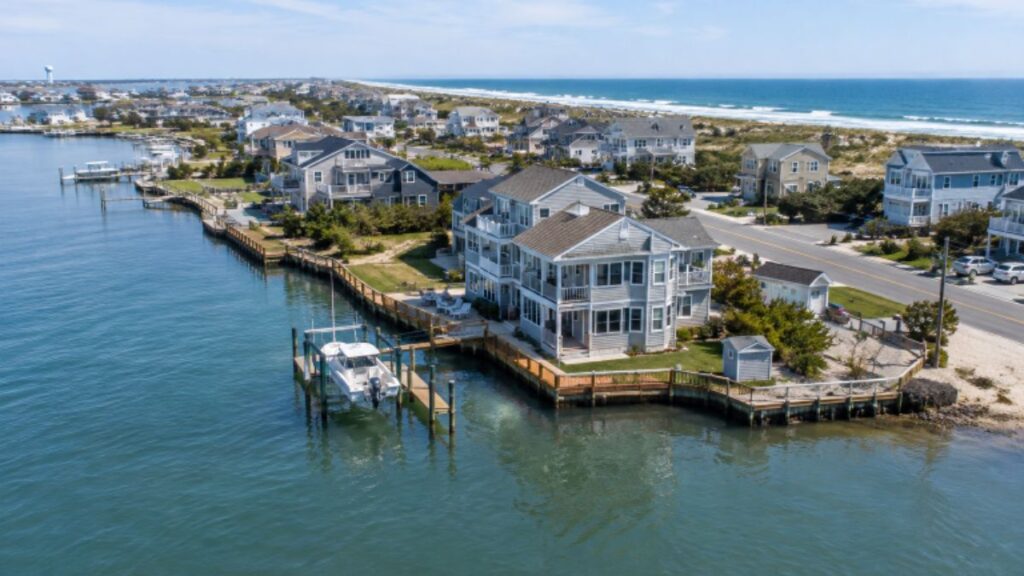
Buying on Long Beach Island means choosing among very different settings, including oceanfront streets, bayfront homes, lagoon properties, and homes near the water without direct frontage. Each can offer a distinct lifestyle, but each also calls for careful due diligence before an offer becomes binding.
For buyers comparing Long Beach Island NJ homes for sale, The Beach House Group offers a Long Beach Island waterfront property resource focused on oceanfront, bayfront, and lagoon-area homes. With a service area that includes Ship Bottom, Surf City, Beach Haven, Harvey Cedars, and Barnegat Light, the team’s local waterfront focus can help buyers compare the practical differences between frontage types, access, and property features.
1. Why Waterfront Buying Is Different
Long Beach Island is a barrier island between the Atlantic Ocean and Barnegat Bay. That setting creates the appeal of beach access, bay sunsets, boating, and coastal living, while also making exposure to wind, salt air, tides, heavy rain, and storms part of ownership. Oceanfront homes may prioritize dune access and views. Bayfront and lagoon homes may prioritize docks, boat lifts, and navigable water. A home described as waterfront, however, does not automatically include private docking rights, sufficient water depth, or a usable shoreline.
2. Start With the Property and Location
Study the specific lot rather than relying on listing photos. Visit at different times of day if possible, and look at sun exposure, traffic, parking, nearby bridges, beach access, marinas, and routes off the island. Ask how the street, driveway, and surrounding area perform during high tide, prolonged rain, and strong wind. A home with a similar floor plan can function very differently depending on elevation, frontage, road access, and the condition of neighboring shoreline structures.
3. Review Flood and Storm Risk
A flood-zone label is a starting point, not a complete risk assessment. Review the home’s elevation, foundation type, drainage patterns, location of utilities, and any lower-level storage or mechanical areas. Use the FEMA Flood Map to locate the relevant flood map, then discuss the property-specific information with an insurance professional and qualified local advisers.
Records to Request
- Current survey and available elevation certificate
- Seller disclosure statement and storm repair records
- Flood insurance claim information, when available
- Permits for additions, decks, enclosures, and structural work
- Receipts or reports for drainage, foundation, roof, or exterior repairs
Even if the living area has not taken on water, flooding around access roads, driveways, garages, crawlspaces, or exterior equipment can still affect daily use and repair costs.
4. Price Insurance Before Making an Offer
Request insurance estimates before the end of your due-diligence period. Compare homeowners, flood, wind, excess liability, and, where relevant, coverage for docks or other detached structures. Review deductibles, exclusions, limits, replacement-cost terms, and lender requirements. The seller’s current premium is useful background, but it may not reflect your insurer, coverage choices, prior claims, or rebuild assumptions.
5. Inspect Waterfront Structures
A standard home inspection may not provide a complete assessment of marine and shoreline features. Consider whether separate review is appropriate for bulkheads, seawalls, docks, piers, pilings, boat lifts, shoreline stairs, exterior electrical equipment, and decks exposed to salt air. A marine contractor, structural engineer, surveyor, or licensed electrician may be better suited to inspect particular concerns.
Compare what is on site with permits, surveys, and approved plans. Unpermitted or poorly documented work can complicate repairs, insurance, future improvements, and resale.
6. Verify Water Access and Property Rights
Bayfront and lagoon buyers should confirm what the property actually permits and supports. Measure or verify water depth at low tide, consider the route to open water, and check bridge clearance for the boat you expect to keep there. Review shared-dock agreements, easements, access paths, maintenance duties, and title matters that affect the shoreline or water use.
New Jersey coastal projects can require state review, so planned work involving docks, bulkheads, filling, grading, or waterfront structures should be discussed with the appropriate professionals and the New Jersey Department of Environmental Protection land use program. An existing dock or bulkhead does not guarantee approval for replacement, enlargement, or a new configuration.
7. Check Renovation and Rental Rules
Test your future plans before making them part of the purchase decision. Review local zoning, setbacks, height limits, floodplain requirements, and rules for pools, decks, additions, enclosed lower areas, or new docks. If rental income matters, verify current municipal registration, occupancy, and rental rules, along with any homeowners association restrictions. A property that has an existing feature may not qualify for the same feature if it is rebuilt or expanded.
8. Build a Realistic Ownership Budget
Look beyond the purchase price and mortgage payment. A practical annual budget should include property taxes, homeowners and flood insurance, utilities, dehumidification, exterior maintenance, roof and window repairs, deck care, dock or bulkhead work, storm preparation, cleanup, permit fees, surveys, engineering, and legal costs. Salt, moisture, and wind can make regular exterior maintenance especially important. Set aside reserves for repairs that may be large, unexpected, or time-sensitive.
9. Questions to Ask Before Closing
- Has the home flooded or received storm-related repairs?
- What coverage is available, and what are the deductibles?
- Are docks, lifts, bulkheads, decks, and additions properly documented?
- How deep is the water at low tide?
- Can the intended boat reach the property without route restrictions?
- Who maintains the shoreline structures and shared improvements?
- Are there easements, tidelands matters, or access agreements?
- Can the planned renovation or rental use be approved?
10. Final Waterfront Home Checklist
- ☐ Confirm the exact type of waterfront access.
- ☐ Review flood maps, elevation, drainage, and repair history.
- ☐ Obtain insurance estimates early.
- ☐ Inspect docks, lifts, bulkheads, seawalls, and pilings.
- ☐ Verify permits, approvals, title items, and easements.
- ☐ Confirm water depth, bridge clearance, and boating access.
- ☐ Check renovation, zoning, and rental rules.
- ☐ Calculate a full annual ownership budget and repair reserve.
A waterfront home on Long Beach Island can be a rewarding purchase when the decision is based on more than the view. Gather records early, inspect the property carefully, price insurance before committing, and use qualified legal, insurance, inspection, and engineering professionals when the property calls for specialized advice.