
Have you ever sat in a brightly lit clinic waiting for a deep internal checkup and wondered how they keep everything safe for you? We usually just trust the medical staff without thinking about the unseen work going on to protect our health. Whenever you undergo a procedure where they look inside your body, the equipment requires an incredibly thorough cleaning protocol that regular washing simply cannot provide. You are trusting that the facility uses the absolute best methods to strip away any dangerous microorganisms before the tools touch you. Detro Healthcare steps right into this critical moment with their Detrox brand, operating firmly on the core principle of truly valuing and respecting human life. They dedicate their expertise to creating advanced solutions because they understand how much is at stake. When clinics rely on proper endoscope disinfection, they are guaranteeing that the most intricate medical tools are completely flawless. It is a hidden layer of protection operating silently in the background.
What Actually Happens When Doctors Look Inside Your Body?
Getting a clear view of our internal organs and body cavities is essential for modern diagnosis and treatment, and the medical devices designed for this purpose are called endoscopes. The main goal of these fascinating tools is to carefully observe and visualize areas that doctors could never possibly see from the outside. Depending on the specific part of the body being checked, these devices have different names and specific features tailored to the task. Medical professionals usually classify them as flexible, non-flexible, or semi-flexible endoscopes based entirely on the characteristics of the distal parts that actually penetrate into the patient. You can easily imagine how delicate and complicated these long visualizing tubes are, making them quite challenging to maintain over long periods. They have incredibly tiny channels where human tissue and fluids can easily get trapped during a normal examination, requiring an extremely specialized approach to clear out every hidden corner perfectly.
Why The Rising Number Of Procedures Requires Stronger Measures
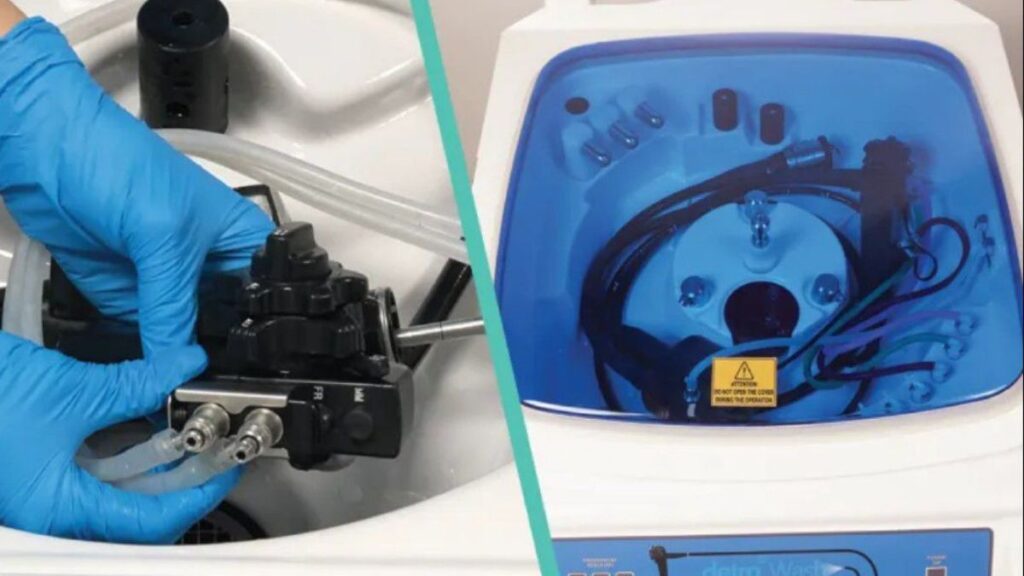
With the massive increase in the use of these visualizing tools across hospitals worldwide, clinics face a serious challenge in managing their equipment turnaround safely. The absolute worst thing that could possibly happen during a routine diagnostic check is passing a severe infection from one person to another simply because a delicate tool was poorly handled. To prevent any chance of infecting other patients, there is an uncompromising demand for the highest cleaning standards available in the medical field today. Trusting a manual wipe down is entirely out of the question when dealing with sensitive internal medicine. Facilities desperately need an automated and highly reliable endoscope sterilization process to handle the heavy lifting and entirely remove the risk of human error from the equation. Advanced chemical systems flush specific medical grade fluids through every microscopic channel of the device, breaking down organic matter completely and leaving nothing behind for the next patient.
Creating True Peace Of Mind For Medical Professionals And Patients
Knowing that such rigorous science backs up your safety changes how you feel about going to the hospital for an uncomfortable procedure. The dedicated medical staff also get to breathe a lot easier when they know their equipment is flawlessly sanitized and perfectly ready for action without any lingering doubts in their minds. They can focus their entire attention on figuring out your specific health issues and providing excellent care rather than constantly stressing over the hygiene status of their fragile instruments. Every single time a perfectly clean tube is prepared for a new patient, it represents a massive victory for public health and modern chemical engineering. We rely heavily on specialized developers to keep pushing the absolute boundaries of what these chemical systems can do to handle increasingly resilient microscopic bugs. It takes a huge amount of continuous research and meticulous lab testing to stay ahead of the natural bacteria challenging our healthcare environments.
The Unseen Heroes Working Inside The Decontamination Rooms
Looking at the complexity of the medical tubing involved in these procedures, you realize that manually flushing water leaves far too much room for errors. Modern automated decontamination rooms take all the guesswork out of this delicate equation by utilizing advanced sensors that constantly monitor fluid pressure and temperature throughout the entire cleaning cycle. If a tiny channel inside the viewing scope gets temporarily blocked by residual organic debris, the smart systems immediately detect the unusual pressure change and alert the medical staff long before the cycle finishes. You get an incredibly high level of precision that guarantees the specialized chemical agents reach every single microscopic scratch on the delicate instrument’s surface. Hospitals and local clinics invest heavily in these intelligent setups because relying on basic visual inspections simply falls short of the rigorous safety protocols required in modern medicine today.
How Specialized Formulas Protect Extremely Delicate Equipment
The chemicals required to eradicate stubborn pathogens must possess a very unique balance to function correctly inside a busy clinical setting. You need a formula that aggressively attacks microscopic threats while remaining surprisingly gentle on the expensive lenses and flexible plastics that make up the viewing scopes. Aggressive corrosive agents might kill the bacteria perfectly well, but they would destroy the expensive equipment after just a few washes, making them entirely useless for practical medical applications. The developers working on these specialized fluids spend years tweaking the exact molecular composition to ensure it interacts safely with the various rubber seals and delicate optical fibers penetrating your body. The fluids must also rinse away completely without leaving any toxic residue that could potentially irritate your internal organs during the next examination. You benefit directly from this relentless pursuit of chemical perfection every time you lie down on a clinic bed for a diagnostic check.