
You remember the day you drove it off the lot. The paint looked like liquid glass, the trim was a deep, rich black, and the interior smelled fresh and untouched. But look at that same vehicle five years later, and the story changes. The shine has dulled, the rubber seals are cracking, and maybe there are faint spots on the hood that won’t wash off.
The Relentless Assault of Weather
Your vehicle is built to withstand the outdoors, but no material is impervious to constant exposure. Different weather patterns attack your car’s exterior and mechanical components in unique ways, slowly stripping away its youth.
The Sun: A UV-Ray Burn
Sunshine might make for a beautiful drive, but it is your car’s worst enemy. Just as ultraviolet (UV) rays damage human skin, they wreak havoc on automotive finishes. This process, known as photodegradation, breaks down the chemical bonds in your car’s paint.
Modern cars have a clear coat—a transparent top layer designed to protect the color underneath. Over time, UV exposure oxidizes this clear coat. If you’ve ever seen a car with peeling, chalky white patches on the hood or roof, you are looking at clear coat failure. Once this layer is compromised, the base color fades rapidly.
The damage isn’t limited to the exterior. UV rays pass through your windows, turning your interior into a greenhouse. This heat and direct radiation dry out leather seats, causing them to stiffen and crack. It also bleaches the color from dashboard plastics and upholstery, making a once-vibrant interior look tired and worn.
Rain and Humidity: The Catalyst for Corrosion
Water seems harmless, especially since we use it to clean our cars. However, prolonged exposure to moisture is the primary catalyst for oxidation, better known as rust.
When iron (found in steel) reacts with oxygen and water, it forms iron oxide. High humidity levels accelerate this reaction. While modern vehicles are galvanized to resist rust, they aren’t immune. If a rock chip exposes bare metal, rain provides the moisture needed to start the corrosion process.
Furthermore, water can get trapped in the hidden crevices of your car’s chassis. Drain holes in doors and rocker panels can become clogged with debris, allowing water to pool inside the frame. This internal moisture rots the vehicle from the inside out, often causing structural damage before you even see a bubble in the paint.
Snow and Ice: A Chemical Cocktail
Winter brings a dual threat. First, there are the physical effects of extreme cold. Low temperatures cause plastic clips, rubber hoses, and windshield wipers to become brittle. A simple act like opening a frozen door handle can result in it snapping off.
However, the bigger threat comes from road maintenance. To keep roads safe, municipalities use rock salt (sodium chloride) and liquid de-icers (magnesium chloride). These chemicals lower the freezing point of water, but they are highly corrosive.
When salt mixes with melting snow, it creates a salty slush that sprays into your wheel wells and coats the undercarriage. This saltwater acts as an electrolyte, significantly speeding up the chemical reaction of rusting. It eats away at exhaust systems, suspension components, and brake lines. If left unwashed, a single winter season can age a car’s underbelly by several years.
The Toxic Toll of Pollution
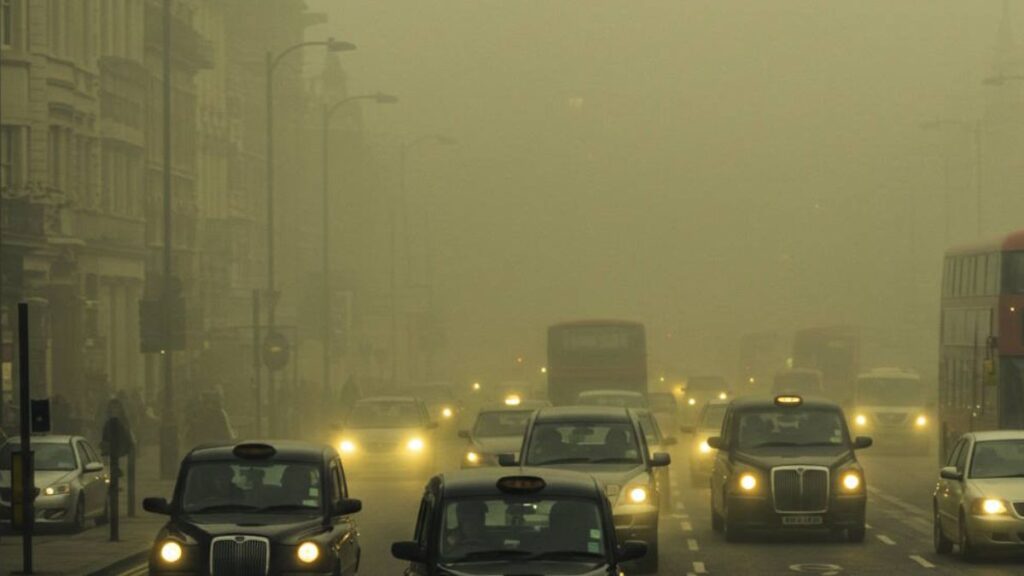
It isn’t just natural weather patterns that degrade your vehicle; industrial byproducts play a massive role as well. Airborne contaminants are invisible to the naked eye until the damage is done.
Acid Rain
“Acid rain” sounds like something from a sci-fi movie, but it is a very real phenomenon caused by burning fossil fuels. When sulfur dioxide and nitrogen oxides are released into the atmosphere, they react with water, oxygen, and other chemicals to form acidic compounds.
When this acidic precipitation lands on your car and the water evaporates, the concentrated acid remains. It eats into the clear coat, creating etched depressions. These look like water spots, but unlike mineral deposits from a garden hose, they cannot be wiped away. They are permanent scars in the paint surface that require professional polishing to remove.
Smog and Particulates
If you live in a city or near an industrial zone, your car is constantly bombarded by particulate matter. This includes soot, smoke, and fine dust.
One of the most annoying forms of particulate pollution is “rail dust”—tiny metal shavings produced by the friction of train wheels on tracks, which drift through the air. Another source is the brake dust generated by other vehicles on the highway.
These hot, microscopic metal particles land on your paint and embed themselves into the surface. Over time, they oxidize, creating tiny orange specks that are particularly visible on white or light-colored cars. This effectively turns your paint into sandpaper. If you run your hand over a clean car and it feels rough or gritty, you are feeling embedded pollution.
Beyond the paint, smog and dust clog your engine’s air intake filters and cabin air filters much faster, reducing engine efficiency and air quality inside the vehicle.
Best Practices for Protection
You cannot control the weather or the air quality, but you can control how your vehicle is prepared to face them. A consistent care routine is the difference between a car that looks old at 50,000 miles and one that looks showroom-fresh at 150,000.
Regular Washing and Waxing
The simplest defense is often the best. Washing your car regularly (every two weeks is ideal) removes corrosive salt, bird droppings, and acidic pollutants before they have a chance to bond to the paint.
However, washing alone isn’t enough. You must apply a sacrificial layer. Carnauba wax or a synthetic polymer sealant acts as a barrier between the elements and your clear coat. When UV rays or acid rain hit a waxed car, they damage the wax rather than the paint. Since wax is easily reapplied, it takes the hit, so your car doesn’t have to.
Shelter and Storage
Minimizing exposure is key. If you have a garage, use it. It protects against UV radiation, hail, and tree sap. If a garage isn’t an option, consider a high-quality car cover.
Be careful with car covers, however. You need a cover that is “breathable.” If the fabric traps moisture against the car’s surface, it can actually accelerate mold growth and clear coat fogging. Ensure the car is clean before putting the cover on, as a cover sliding over a dirty car will scratch the paint in the wind.
Specialized Coatings and Treatments
For those looking for protection beyond standard wax, modern technology offers superior solutions. Ceramic coatings provide a chemically bonded layer of protection that lasts for years, offering extreme resistance to UV rays and chemical etching.
For the ultimate physical barrier, consider car paint protection film (PPF). Often referred to as a “clear bra,” this is a thick, transparent urethane film applied to high-impact areas like the front bumper, hood, and mirrors. PPF is unique because it absorbs the energy from rock chips and scratches, preventing them from reaching the paint. Many high-quality films are even “self-healing,” meaning minor scratches disappear when exposed to heat from the sun.
Conclusion
Cars are depreciating assets, but the rate at which they lose value is largely up to you. The aging process caused by sun, rain, and smog is cumulative. A single day of exposure doesn’t ruin a car, but years of neglect will lead to faded paint, rust issues, and a significantly lower resale value.