
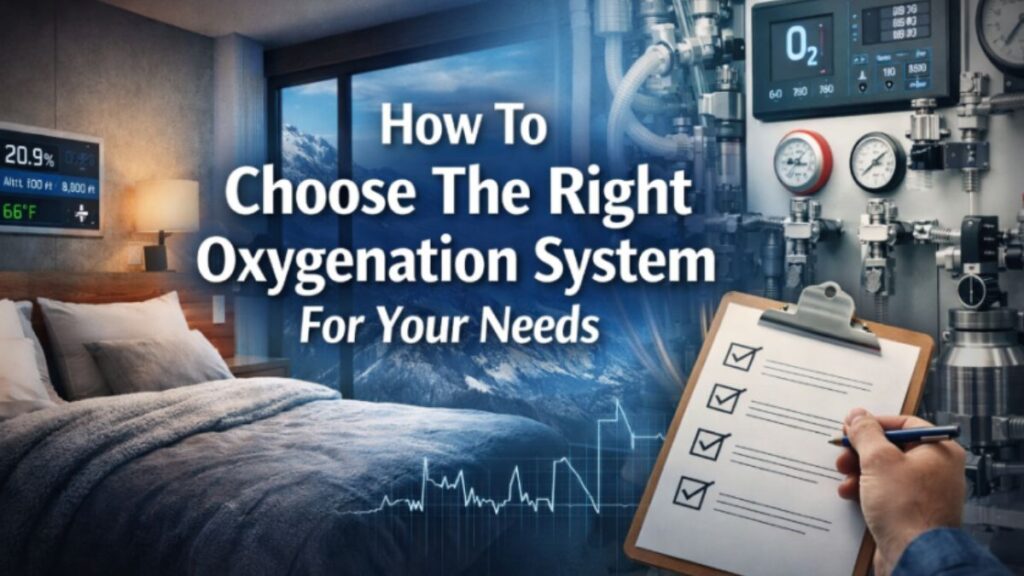
Living or working at higher elevations often presents unexpected challenges. Sleep may seem less rejuvenating, daytime fatigue becomes apparent, and bodily restoration takes longer than one would anticipate. In the meantime, tightly sealed modern buildings may further compromise the balance of oxygen inside the building, influencing comfort and productivity. Because oxygen-related discomfort builds up gradually, many individuals have trouble determining a cause or finding an effective solution.
At the same time, technical options, system sizes, and installation requirements can make choosing a solution confusing. That is why it is important to know how oxygenation systems work and how to choose the right one before making an investment.
This article discusses how to identify which oxygenation system works best for your environment, goals, and long-term comfort needs.
1. Understand What Oxygenation Systems Actually Do
Oxygenation Systems raise oxygen levels in the air inside internal spaces, which helps to offset the levels of elevation or less oxygen environments. As a result, many users enjoy better sleep quality, better recovery, and improved comfort during the day.
However, choosing a system without having any understanding of your objective often results in mismatched expectations. For example, some users are interested in better sleep at night, while others are interested in performance recovery or guest comfort in hospitality environments. Each purpose has an effect on system size and configuration.
In addition, knowledge of how oxygen delivery works is useful for distinguishing practical from marketing messages. Rather than making decisions based entirely on price or popularity, you can make decisions based on measurable results. Ultimately, understanding the system’s purpose helps ensure your investment solves a real need.
2. Evaluate Space Where the System Will Operate
Next, consider where oxygenation will occur. Different environments demand different system capacities. A single bedroom, for example, requires a lower rate of oxygen output as compared to an entire residence or multiple guest rooms.
Room volume, ceiling height, and air circulation also have an impact. Larger spaces need a greater capacity to deliver oxygen to the space and keep the oxygen at a consistent level. Likewise, airflow patterns govern the uniform distribution of oxygen in the room.
Additionally, building insulation and airtight building construction have an effect on oxygen retention. Oxygen balance is more important at elevation in modern buildings, which often trap indoor air. Therefore, evaluating room characteristics avoids underperformance or unnecessary overspending. A clear sense of the space needs results in a more adequate system selection.
3. Match System Capacity With Actual Usage Needs
After defining the environment, the capacity of the system must be matched with the expected usage. Smaller systems work well when serving one or two sleeping spaces, while larger integrated systems serve entire homes or commercial environments.
However, choosing a system larger than needed increases costs without providing better results. On the other hand, systems with inadequate capabilities have difficulty sustaining effective oxygen levels that produce less-than-desirable performance.
Occupancy levels are also important. Rooms occupied by more than one person or locations with a high turnover of guests require more oxygen supply. Therefore, taking into account how often and how many people use the space enables consistent results.
By matching the capacity of the system to actual usage patterns, performance is maintained without the need to spend on operational expenses unnecessarily.
4. Consider Installation and Integration Requirements
Installation planning plays an important role in the success of systems. Some oxygenation systems require little alteration, while others incorporate with ventilation or duct systems. Consequently, installation complexity has an impact on the project cost and timeline.
For existing homes, installation may require the routing of air delivery lines through existing or finished spaces, which requires some planning. By comparison, new construction projects provide for easy integration before walls and ceilings are built.
Noise and the placement of equipment are also of concern. Bedrooms and relaxation spaces benefit from quieter configurations or remote equipment placement. Therefore, evaluating the installation requirements at an early stage allows disruptions to be avoided and systems to be operated in a quiet and efficient manner within living environments.
5. Evaluate Maintenance and Long-Term Operating Costs
While the upfront price is often used to make decisions, long-term ownership costs need equal consideration. Oxygenation systems are operational on a regular basis, so efficiency and maintenance have become important factors in overall value.
For example, filter replacement, servicing schedules, and energy consumption impact long-term expenses. Systems designed for durability and efficient operation usually minimize the frequency of maintenance and the operational cost of the system.
Furthermore, automated monitoring features help maintain consistency in performance by warning users when servicing of systems is required. As a result, unexpected downtime also becomes less likely.
Therefore, examining current maintenance needs in conjunction with the cost of purchase ensures long-term sustainability of operation and avoids future budget shock.
Final Thoughts
Choosing the right oxygenation system requires more than selecting equipment with appealing specifications. Instead, success comes from understanding your environment, usage patterns, installation conditions, and long-term comfort goals so the solution genuinely supports everyday needs rather than simply adding new equipment to your space.
By carefully evaluating these factors, you position yourself to invest in a solution that improves sleep quality, recovery, and daily comfort while fitting naturally into your living or operational space without creating unnecessary complexity. This approach also helps ensure the system continues delivering value as needs evolve.
When approached thoughtfully, oxygenation technology becomes a practical improvement that enhances indoor environments wherever oxygen limitations affect everyday life, supporting better rest, stronger performance, and more comfortable living over time.