A successful site project begins before any brush is cut or equipment arrives. Whether the goal is a future building area, improved access, drainage work, fencing, or general maintenance, land clearing should follow a clear plan that accounts for the property’s layout, hazards, soil conditions, and intended use.
Removing every tree and plant is rarely the right objective. Keeping healthy trees, stable ground cover, and natural drainage routes where possible can reduce later work while helping the property remain safer and easier to manage.
Why Planning Matters Before Land Clearing
A written scope helps prevent avoidable surprises. It should identify the site’s final purpose, the areas that need work, the vegetation or features that must remain, the expected debris-handling method, and the condition the ground should be in when work ends.
Planning also helps distinguish between clearing and surface preparation. For example, land grading may be needed after vegetation removal when the property must direct water safely, support a driveway, or provide a level area for a later improvement.
How to Assess the Property
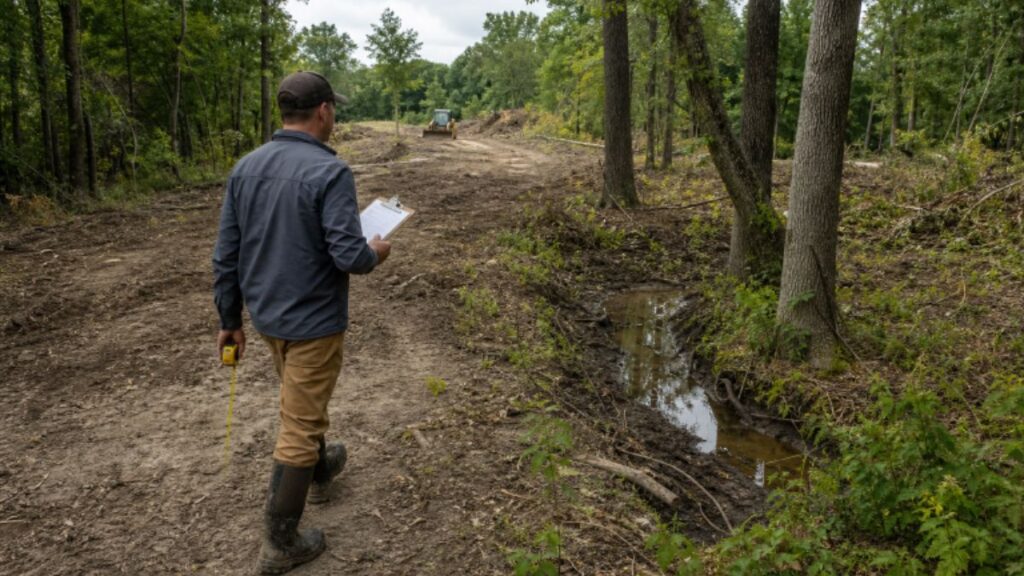
Walk the entire property before setting a work sequence. Mark visible features, take photos, and note conditions that may affect equipment access or the amount of cleanup required. A lot that looks open from the road may have a wet rear section that cannot safely support heavy machinery.
- Confirm property boundaries, neighboring structures, fences, and shared access areas.
- Identify slopes, low spots, ditches, ponds, streams, and drainage paths.
- Flag large trees, gardens, screening vegetation, or habitat areas worth preserving.
- Look for overhead wires, utility markers, wells, septic components, old foundations, and buried debris.
- Choose practical locations for equipment staging, material storage, and debris piles.
Permits, Buffers, and Environmental Limits
Rules can differ by city, county, zoning district, project size, and proximity to wetlands or waterways. Before clearing begins, verify local requirements for tree removal, setbacks, flood zones, disposal, and erosion controls with the appropriate planning, building, or environmental office.
Projects that disturb one acre or more, or smaller areas that are part of a larger common development plan, may need federal construction stormwater permit coverage. The construction stormwater requirements explain why clearing, grading, and excavation need controls to limit the transport of sediment and other pollutants off-site. Smaller projects can still be subject to local rules.
Choosing a Clearing Method
The right approach depends on the site’s density, access, future use, and features that need protection. No single method fits every lot.
Selective Clearing
Selective work removes only designated vegetation. It can preserve shade, privacy, mature trees, and existing ground stability, especially where a fully bare site is unnecessary.
Mechanical Clearing
Heavy equipment can efficiently remove dense brush, roots, stumps, and uneven material. It may also cause greater soil disturbance, increasing the need for follow-up grading, hauling, and stabilization.
Forestry Mulching and Hand Work
Forestry mulching processes eliminate on-site vegetation and can reduce hauling. Hand tools and light equipment offer more control near homes, fences, utility lines, and preserved trees. Mulching alone, however, does not replace excavation or compaction where construction is planned.
Controlling Erosion and Runoff
Once vegetation is removed, exposed soil can wash into storm drains, ditches, and nearby water during rain. The EPA’s stormwater best management practices describe tools such as stabilized entrances, mulch, sediment barriers, inlet protection, and construction sequencing that can reduce these risks.
- Install perimeter controls before major disturbance begins.
- Keep soil piles, fuel, and debris away from drainage routes.
- Use a stabilized entrance to limit mud tracked onto public roads.
- Cover, mulch, seed, sod, or otherwise stabilize inactive bare areas.
- Inspect controls after heavy rain and repair weak spots promptly.
Managing Land Clearing Debris
Debris planning should happen at the start, not after the site is full of piles. Brush, logs, stumps, roots, rock, soil, scrap metal, and mixed waste may each require a different handling method. Clean wood may be chipped, mulched, reused where allowed, or removed. Mixed waste, chemicals, tires, and household trash should be separated from vegetation and handled through appropriate disposal channels.
Keep debris out of drainage paths and away from structures. Large unmanaged piles can block access, hide hazards, collect water, and create extra handling when the next phase begins.
A Safer Project Sequence
- Define the site’s final purpose.
- Walk, photograph, and mark boundaries, utilities, trees, and drainage features.
- Confirm permits, setbacks, disposal rules, and stormwater duties.
- Prepare safe equipment access and staging areas.
- Install erosion and sediment controls.
- Clear in phases so unused areas remain protected.
- Process or remove debris as work progresses.
- Grade, stabilize, and inspect disturbed ground.
The Final Cleanup and Site Check
Final cleanup is about more than appearance. Remove loose branches, wire, scrap metal, and sharp objects. Confirm drainage routes are open, temporary controls still function, and there are no ruts, washouts, soft areas, unstable slopes, or hidden debris. Check preserved trees and nearby structures for damage, stabilize bare soil before the next significant rain, and keep photos for maintenance records.
Common Questions About Land Clearing
Should all vegetation be removed?
No. Suitable vegetation can provide shade, privacy, soil stability, and runoff control. Clear only what the project genuinely requires.
When should erosion controls be installed?
Install key controls before major clearing or grading. Waiting until after a storm can mean more damage, cleanup, and sediment movement.
What happens to stumps and roots?
Options may include grinding, removal, permitted burial, or disposal. The best choice depends on whether the area will become a lawn, a drainage area, a driveway, or a building site.
Safer land clearing starts with a careful assessment and ends with stable, inspectable ground. By protecting useful features, continuously managing debris, and addressing runoff before it becomes a problem, property owners can leave a site ready for its next use.