
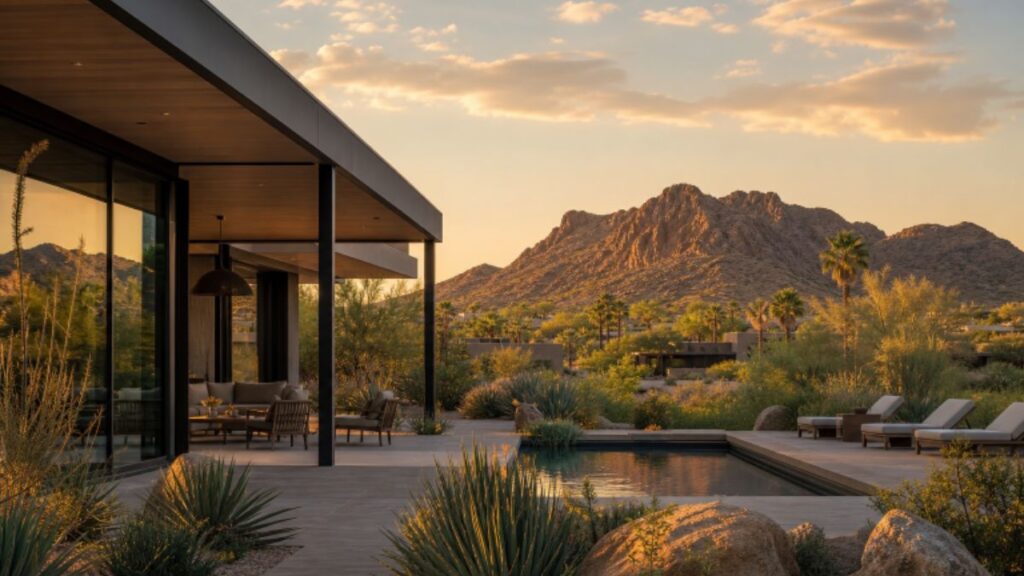
In Paradise Valley, a home’s comfort depends on more than square footage, finishes, and mountain views. Intense sun, long cooling seasons, dust, and water demands make orientation, shade, insulation, and landscaping meaningful ownership decisions. For buyers comparing estates, lots, and renovation opportunities, Paradise Valley, AZ real estate agent Charlie Yin provides an Arizona real estate resource focused on high-end homes, investment properties, and development opportunities. Charlie Yin’s experience in finance, hospitality, real estate investment, and luxury home-building in Paradise Valley brings a useful long-term perspective to lifestyle, maintenance, and property-value considerations.
The strongest desert homes do not sacrifice luxury for efficiency. They use thoughtful planning to create quieter interiors, cooler outdoor rooms, lower-maintenance landscapes, and spaces that feel connected to the Sonoran setting. Whether a home is newly built or decades old, climate-responsive choices can improve how it performs every day.
Start With Orientation, Shade, And Outdoor Comfort
Site planning is one of the most valuable design tools available. Morning sun can be pleasant, while strong late-day western exposure can create uncomfortable heat gain, especially through large glass openings. Before enlarging windows or opening a wall to the outdoors, consider where sunlight will strike each room during summer afternoons.
Deep roof overhangs, covered patios, pergolas, screened courtyards, and shaded walkways can reduce direct sun while preserving natural light. Mature trees and desert-adapted planting also help define usable outdoor areas. A home with well-designed shade and appropriately placed windows may feel more refined than one with larger glass walls but little solar control.
Choose Windows For Views And Performance
Floor-to-ceiling windows can frame Camelback Mountain, Mummy Mountain, or city-light views, but glass selection should match the exposure. Low-emissivity coatings, solar-control glazing, exterior shades, and carefully sized openings can help manage heat without making rooms feel closed in.
It is wise to evaluate the windows room by room. A shaded north-facing living area may have different needs than a west-facing primary suite or a south-facing office. Window performance should also be considered alongside overhangs, insulation, ceiling height, and the HVAC design, rather than treated as a separate cosmetic decision.
Build A Better Thermal Envelope Before Replacing Equipment
Air sealing, attic insulation, roof reflectivity, duct condition, and exterior doors affect how hard a cooling system must work. Small gaps around doors, recessed fixtures, windows, and duct connections can allow conditioned air to escape and bring hot air indoors. Before beginning a major remodel, schedule a home energy assessment to identify the highest-priority improvements.
A Practical Performance Checklist
- Inspect attic insulation and look for uneven coverage or compressed areas.
- Check accessible ductwork for leaks, damaged insulation, and poor connections.
- Seal gaps around doors, windows, utility penetrations, and exterior vents.
- Review roof color, reflectivity, ventilation, and signs of excess attic heat.
- Compare temperatures between rooms during the hottest part of the day.
Cooling decisions deserve the same whole-home approach. ENERGY STAR guidance on heating and cooling emphasizes maintenance, duct sealing, proper installation, and addressing air leaks before assuming that a larger unit is the answer. Ask contractors for room-by-room load calculations, airflow recommendations, and a written scope of work. Variable-speed systems, zoning, heat pumps, and smart thermostats can be useful when selected for the home’s actual layout and usage patterns.
Make Water-Wise Landscaping Feel Intentional
A low-water landscape does not need to look sparse. Native and desert-adapted plants, layered shade trees, gravel or permeable surfaces, and drip irrigation can create texture, privacy, and cooler outdoor rooms. Group plants by water needs so high-use areas are not overwatered simply because they share an irrigation zone with more drought-tolerant species.
The Arizona Department of Water Resources landscaping resources offer useful guidance on regionally appropriate plant choices, irrigation efficiency, and water harvesting. When planning a landscape, ask which plants will tolerate full summer sun, where shade will fall in five or ten years, whether irrigation zones can be adjusted by plant type, and how much monthly maintenance the design will require.
Design Outdoor Living Like A Real Room
Outdoor kitchens, pool areas, dining patios, lounges, and fire features work best when they support daily routines rather than simply add expensive amenities. Consider shade at the time the space will be used, airflow, access to the kitchen, pool safety, and privacy from neighboring properties. Ceiling fans, retractable screens, durable fabrics, and finishes that tolerate sun, dust, and monsoon conditions can extend the season for outdoor living.
Privacy does not require turning an estate into a fortress. Courtyard entries, layered planting, strategically placed walls, gates, and carefully positioned windows can create separation while keeping important views open. Organize exterior areas in layers: welcoming spaces near the entry, semi-private gathering areas, and more secluded zones for bedrooms or personal retreats.
Let Materials Belong To The Landscape
Desert-modern, mid-century, Spanish, Mediterranean, and Pueblo-inspired homes can all feel appropriate in Paradise Valley when materials are used with restraint. Natural stone, textured concrete, earth-toned plaster, wood accents, and metal details often age gracefully in the desert. The goal is not to copy one architectural style, but to choose finishes that complement the land, tolerate the climate, and avoid looking dated after a short design cycle.
Prioritize Lasting Improvements Over Short-Lived Trends
Some upgrades deliver value through comfort and reduced maintenance. Others may be visually dramatic but require careful review.
- Often practical: insulation, air sealing, efficient HVAC, durable windows, shade structures, smart irrigation, and sound drainage.
- Worth evaluating carefully: unshaded glass walls, elaborate water features, highly customized finishes, and oversized outdoor kitchens.
- The deciding question: Will this feature improve daily comfort, reduce maintenance, or broaden future buyer appeal?
A Smart Upgrade Order For Owners And Buyers
- Review current energy, cooling, irrigation, roof, and drainage performance.
- Fix air leaks, insulation gaps, duct issues, and deferred mechanical maintenance.
- Add shade before expanding glass or building larger outdoor areas.
- Improve irrigation controls and replace high-water planting where appropriate.
- Update windows, doors, and exterior finishes as their condition requires.
- Complete cosmetic work after comfort and maintenance needs are addressed.
Questions To Ask During A Paradise Valley Home Tour
- How old are the HVAC systems, roof, pool equipment, and irrigation controls?
- Which rooms become hottest in summer, and what shade do they receive?
- Have ducts been inspected, sealed, or replaced?
- How much of the landscape needs regular irrigation?
- What renovations were completed, and are maintenance records available?
- Does the home’s layout support the buyer’s intended lifestyle and privacy needs?
Desert-smart design is not a limitation. It is an opportunity to create a home that feels cooler, calmer, more durable, and more connected to its setting. In Paradise Valley, the best design choices respect the climate, the land, and the people who will enjoy the home for years to come.