Ensuring the integrity of a building’s drainage system is essential to maintaining a healthy indoor environment and preventing costly repairs. Over time, unseen problems like leaks and cracks can develop in the piping network, leading to system failures and exposure to hazardous sewer gases. An effective, proven way to quickly identify hidden issues is through smoke testing plumbing systems, which has become a standard diagnostic tool in both residential and commercial property maintenance.
Smoke testing offers a simple yet highly effective approach to visualizing problems that would otherwise remain concealed. By introducing non-toxic smoke into the system, property owners and maintenance teams can immediately spot deficiencies long before they turn into expensive or dangerous emergencies.
Early detection is key. Leaks, improper connections, and dry traps may threaten not only building performance but also the comfort and safety of occupants. By making smoke testing a regular practice, building managers can uphold high health and efficiency standards while keeping overall repair costs in check.
Routine smoke testing also supports larger public health priorities by reducing the chances of sewer gas intrusion. Learning more about the practical steps and the science behind this process can help you understand why it is considered an essential preventive maintenance practice.
What Is Smoke Testing?
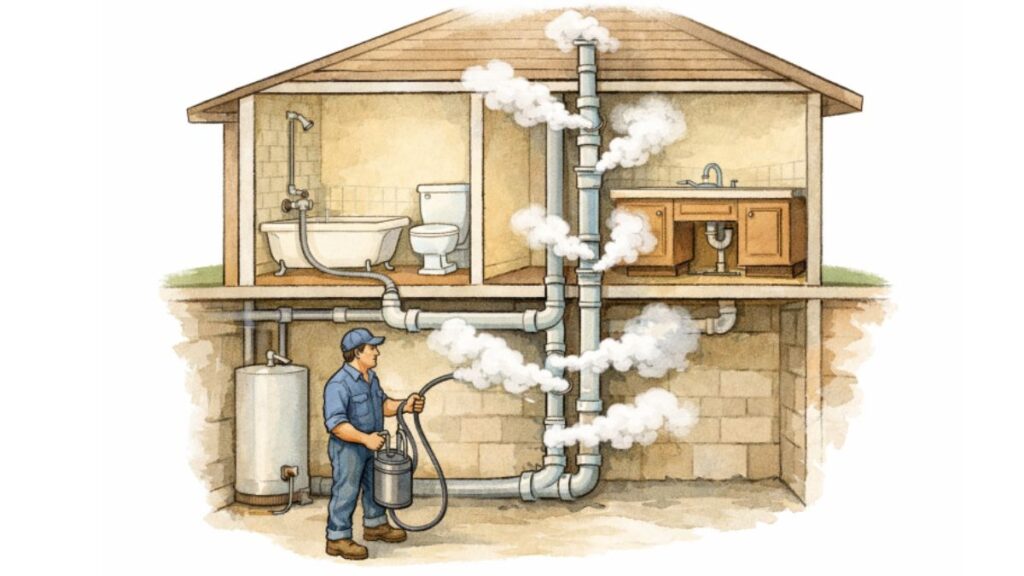
Smoke testing is a fast, safe, and affordable diagnostic method used to inspect a building’s sewer and drain pipes. The process involves blowing artificially created, non-toxic smoke into the system. The path of the smoke, both inside and outside the building, allows maintenance professionals to pinpoint leaks, cracks, and incorrect connections that would otherwise remain undetected. This approach is far less disruptive and more revealing than traditional inspection methods, making it a highly valued part of any maintenance strategy.
How Does Smoke Testing Work?
The smoke testing process typically follows a straightforward sequence:
- Preparation: Maintenance staff notify building occupants about the intended test and safeguard areas where testing will occur.
- Smoke Introduction: A purpose-built smoke generator releases visible, non-toxic smoke into the sewer or drain lines via access points such as manholes and cleanouts.
- Observation: Technicians walk the property and carefully note all locations where smoke emerges, documenting in detail sources of leaks or structural damage.
- Reporting and Repair Planning: A clear report is generated, informing next steps for repair and remediation as needed.
Common Issues Detected by Smoke Testing
Smoke testing uncovers a variety of issues that threaten the health, efficiency, and structural soundness of a drain system:
- Sewer Gas Leaks: Faulty joints and dry plumbing traps can allow hazardous gases to seep into basements, crawl spaces, or living areas. Smoke identifies these intrusion points instantly.
- Cracked or Broken Pipes: Buried, aging, or damaged pipes often fracture or leak over time. Smoke escaping from the ground or from unexpected locations clearly signals these weaknesses.
- Improper Connections: Unauthorized connections or misrouted lines can cause blockages and backflows. Smoke testing flags these issues so they can be corrected before causing greater harm.
- Dry Traps: When water traps dry up, they no longer block sewer gases. Smoke will escape through these pathways, showing areas in need of attention or more frequent use.
Quickly identifying and resolving these problems is critical to long-term building safety and compliance.
Benefits of Regular Smoke Testing
Establishing a schedule for regular smoke testing delivers a range of compelling benefits for any building or property:
- Early Detection: Addressing small leaks and minor misalignments before they cause significant water or structural damage saves money and minimizes disruption.
- Safe Environments: Preventing sewer gas exposure protects indoor air quality and reduces the risk of health problems among occupants.
- Efficient Operation: Well-maintained plumbing systems run more efficiently, which decreases the risk of clogs, backups, and emergency service calls.
- Long-Term Cost Savings: Investing in smoke testing as preventive maintenance delays pipe replacement and avoids large, unexpected repair bills.
A strong preventive strategy is just as important for smaller buildings as it is for large, multi-unit complexes and municipal systems.
Safety Considerations During Smoke Testing
While smoke testing uses non-toxic smoke and is generally safe for people and pets, best practices should always be followed:
- Resident Notification: Give occupants ample warning about the schedule and nature of testing.
- Ventilation: Keep doors and windows open in affected areas to help dissipate smoke quickly if it enters living spaces.
- Professional Oversight: Engage experienced technicians who can monitor for anomalies and address concerns on the spot.
Conclusion
Smoke testing has earned its place as a fast, reliable, and non-invasive solution for assessing the integrity of drain systems. By visually revealing hidden leaks, improper connections, and aging infrastructure, it improves occupant safety, helps avoid emergency repairs, and supports the long-term health of building systems. Adding smoke testing to your regular maintenance routine protects your investment and provides immediate peace of mind for owners, residents, and facility managers alike.