
Making the right choice in a pushcart is about more than just transportation; it is about protecting your independence and ensuring everyday activities are comfortable and accessible. For those who need tailored mobility solutions or support for specific conditions, options such as special needs strollers can be vital. Selecting a pushcart designed to fit your unique requirements will provide ongoing benefits for years to come.
Every individual’s mobility situation varies, making it crucial to assess personal needs to ensure that the investment in a pushcart enhances comfort and supports an active lifestyle. The selection process should factor in daily routines, physical abilities, and future aspirations to determine the ideal features and model. Focusing on mobility priorities—whether for long-distance travel, errands, or family activities, lays the foundation for informed decision-making. Taking the time to evaluate both current and anticipated needs can prevent unnecessary upgrades or replacements, ultimately leading to a more satisfying user experience.
Understanding Your Mobility Needs
Begin by candidly and realistically assessing your mobility requirements. Ask yourself:
- How much stability and assistance do I need? A straightforward pushcart may suffice for light assistance, while those who require greater stability should choose a pushcart with enhanced support, brakes, or a built-in seat.
- Will the pushcart be used mainly inside, outside, or both? Indoor-only models can be lighter and nimbler, while outdoor models should feature durable wheels and frames to handle uneven terrain.
- How frequently will I use it? Daily users should seek durable and ergonomic options, while occasional users may prefer a design that folds for storage and transportation. If you plan to travel, portability features will be especially important.
Before finalizing any purchase, consider the physical environments you expect to navigate, including the width of your home’s hallways, the condition of local sidewalks, and the steepness of nearby inclines. According to the Arthritis Foundation, choosing an assistive device tailored to your needs can make a meaningful difference in your comfort and safety.
Key Features to Consider
Ergonomic Design
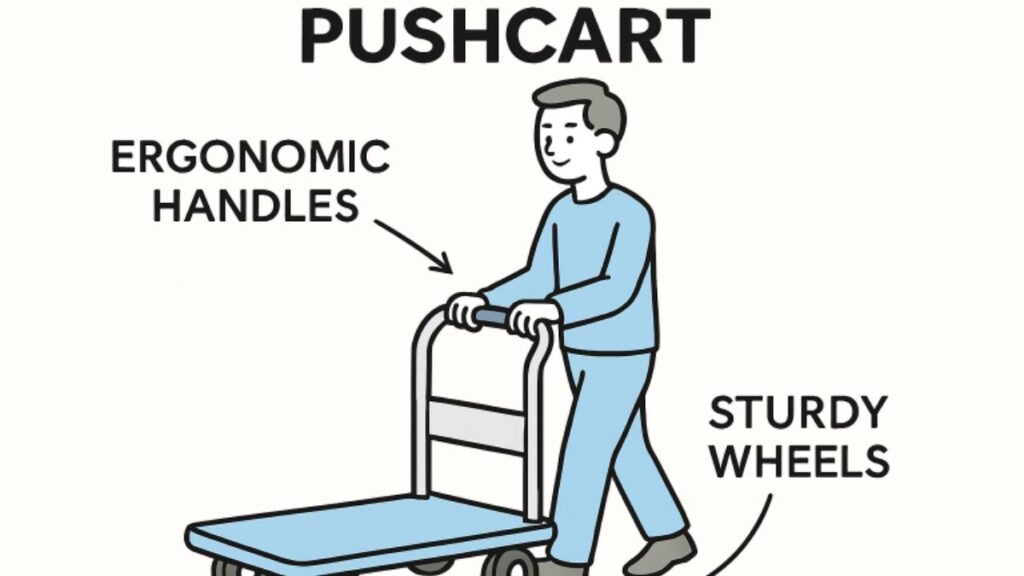
An ergonomically designed pushcart will reduce strain on your hands, arms, and back. Features like adjustable handles help you maintain an upright posture, while padded grips help prevent hand fatigue. Adjustable elements ensure that the pushcart can serve multiple users or adapt to your changing requirements.
Wheel Type and Maneuverability
The wheels are among the most critical considerations for comfort and ease-of-use:
- Pneumatic (air-filled) tires: These provide exceptional shock absorption, making them the best option for rough terrain. However, maintaining proper air pressure is necessary to avoid flats and ensure a smooth ride.
- Solid rubber tires: Requiring no ongoing maintenance, these are preferred for smoother, predictable surfaces, such as shopping centers or paved paths, though they may transmit more vibration on uneven ground.
For those navigating tight spaces, swivel wheels enhance maneuverability and reduce the effort needed to turn or change direction. Selecting wheels that are both durable and appropriate for your environment is as important as the pushcart’s overall build.
Weight Capacity and Storage
It is vital to ensure that your pushcart can safely support the intended load, whether it is personal items, groceries, or medical equipment. Exceeding the recommended weight can make the unit less stable and more difficult to maneuver. Look for built-in storage solutions, such as wire baskets, fabric pouches, or under-seat compartments, to keep belongings secure and accessible while on the move.
Portability and Storage
If your living space is limited or you are frequently on the go, prioritize pushcarts that fold easily. Collapsible models are designed for quick storage in closets, car trunks, or public transport. Portability features can make a significant difference in day-to-day convenience, especially for users who may transition between home, work, and recreational settings.
Safety Features
A superior pushcart should offer peace of mind through its safety features. Reliable braking systems are crucial for maintaining control while navigating inclines or busy crossings. Models with reflective trim or integrated lights improve visibility, making them safer for low-light conditions. Non-slip handles and stability-enhancing design elements contribute to overall safety for both the user and people nearby.
Consulting Professionals
Choosing a pushcart without professional input can lead to dissatisfaction or even safety concerns. Mobility specialists and healthcare providers assess physical limitations and environmental challenges to make specific product recommendations. Consulting these experts helps match your unique circumstances with the most appropriate device, ensuring long-term satisfaction. They may also suggest training or accessories to further improve your experience.
Conclusion
Selecting the perfect pushcart can make daily tasks easier and more enjoyable. By understanding your individual needs, focusing on ergonomic and safety features, and seeking expert guidance, you can invest with confidence. The right pushcart supports continued independence, comfort, and overall well-being, allowing you to participate fully in every aspect of your daily routine.