

Electricity has become an integral part of everyday life, but at one time, it was highly inaccessible and monopolized. Homes and workplaces of the early years had small wall outlets, and each could only be used at a given time.
With the gradual introduction of electrical appliances into daily life, this arrangement drew distinct boundaries. Human beings desired to operate more devices without having to rewire buildings or install complicated electrical systems.
This increased demand promoted easy fixes that would not compromise power accessibility. With time, such solutions were enhanced with design and reliability. The power strip was one of the most viable tools that came out to fulfill this need, and it was later adapted to change lives.
Its growth indicates gradual improvement in safety, structure, and flexibility. Starting with the simplest outlet expansion to managing power in complex ways, the development of the power strip reveals how small electrical devices enable the broader shifts in electricity use today.
The following section explains how power strips have evolved over time and kept pace with increasing power requirements.
1. Early Power Access Solutions And Shared Electricity Use
In early electrical use, building layouts were primarily concerned with lighting and the operations of single devices. This design was effective in situations where the amount of electricity consumption was minimal and predictable.
Growing consumption of radios, household tools, and small appliances, however, soon revealed its limitations. Citizens were required to share a single outlet of electricity without unsafe connections or twisted wires.
The power strip came to this rescue by enabling a number of plugs to be connected to a single power source. At first, they were plain and had little spacing, but they made everyday life easier.
With time, there was less crowding with improved spacing of sockets and more flexibility in the rooms with longer cords. The use of stronger materials also enhanced durability and reliability.
With these initial alterations, the users were able to structure power consumption in a more efficient way and spread the load across hard-wired outlets. Power strips became useful as shared electricity became universal, and they do not need permanent wiring modifications as people use more devices in their homes and small workstations.
2. Workplace Expansion And Structured Power Distribution
With the increase in offices and commercial areas, power demand became more streamlined and uniform across larger areas. Early computers, office machines, and communication gadgets demanded a continuous supply of electricity in workplaces.
Power strips that were developed to address these requirements provided matching outlets with better housings that could be placed comfortably under the desks or along workstations. Such a structure minimized cable clutter and made layouts clean and safe.
In factories, powerful access was needed to rely on tools, testing systems, and controlled operations. Manufacturers responded by creating designs that were designed to last longer and have greater electrical demand.
With these additions, power strips became part of the planning of the workplace. They were now used to promote efficiency, organization, and the reliable flow of power, particularly in environments where continuous operation is relevant to day-to-day productivity and system performance.
3. Safety Standards And Protective Design Progress
With the widespread adoption of power strips, safety became a greater concern for both users and manufacturers. The initial designs were not designed to withstand overload or unexpected electrical failures, and this made them more likely to be damaged.
As time went by, this was enhanced with better standards, which led to safer construction and internal design. Circuit breakers were used to prevent unnecessary current from being drawn to the point of destruction, and grounded plugs enhanced user safety.
Surge protection became popular, too, and it protects devices on a grid against unexpected voltage swings caused by storms or grid problems. This development enabled its safe application in homes, offices, and industrial settings, where a reliable, consistent power supply was essential to most daily activities.
4. Residential Commercial And Industrial Product Variety
Due to variations in electrical needs across different environments, power strips were designed to serve specific functions. Home users needed small-sized entertainment systems, chargers, and personal electronics.
Offices required designs that could accommodate computers, monitors, and networking devices without failure. Industrial sites required robust solutions that could withstand constant activity and preset conditions. The manufacturers responded with different numbers of outlets, cord length, and mounting capabilities.
This variety allowed users to select products suited to their space instead of adjusting layouts to fit electrical tools. As a result, power distribution became more organized and efficient. This stage marked a clear shift toward purpose-driven designs that supported reliable power access while meeting practical demands across residential, commercial, and industrial settings.
5. Modern Custom Solutions And Future Power Management
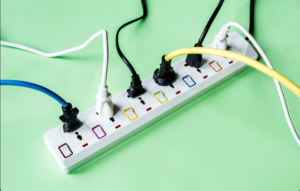
Modern power strips reflect growing demand for flexibility and precise power control. Many designs now support custom configurations that match specific equipment layouts and operational needs.
In industrial and technical environments, tailored power solutions reduce cable congestion and improve workflow efficiency. Some designs also support controlled power use, helping manage electricity more responsibly across systems.
This shift highlights movement away from standard models toward personalized solutions. Power strips now serve as integrated components within advanced electrical systems rather than simple outlet expanders.
As technology continues to advance, these devices remain adaptable and dependable. Their ability to evolve alongside modern power demands ensures continued relevance across changing applications, industries, and future electrical requirements.
Conclusion
The history and evolution of the power strip show steady progress shaped by rising electrical demand and practical innovation. From early outlet expansion to structured workplace solutions and modern custom designs, each stage improved safety, organization, and usability.
Power strips transformed from simple accessories into essential components of everyday electrical systems. Their continued development supports reliable power access across homes, offices, and industrial environments.
As electrical needs continue to grow, power strips remain dependable tools that adapt to modern standards while supporting future power requirements with efficiency, control, and confidence.