
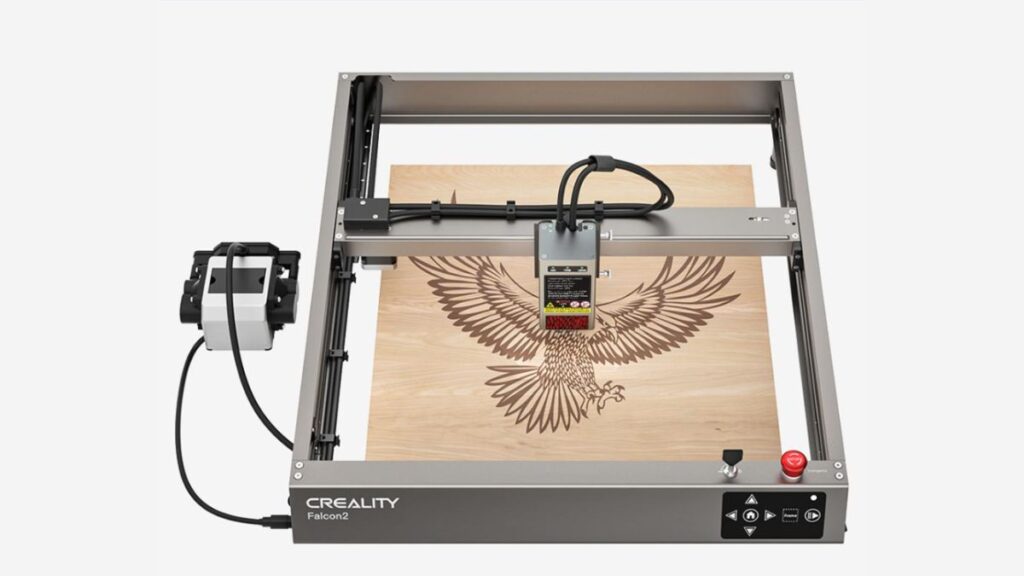
Laser cutters have revolutionized manufacturing, crafting, and prototyping across countless industries.
From intricate designs on wood to high-precision metal fabrication, these machines offer efficiency, consistency, and accuracy that traditional tools cannot match.
However, not all laser cutters use the same technology.
Different laser sources are designed for different materials, budgets, and production goals.
Choosing the wrong type can limit capabilities or increase costs unnecessarily.
This guide explains the three primary laser cutter types used today—CO₂, Fiber, and Diode—so you can make an informed decision based on real-world needs.
What Is a Laser Cutter and How Does It Work?
A laser cutter is a computer-controlled machine that uses a focused, high-energy laser beam to cut, engrave, or mark materials. The laser heats the material until it melts, burns, or vaporizes, producing clean and precise results.
Core Components
- Laser source – generates the laser beam
- Optics – mirrors and lenses that guide and focus the beam
- Motion system – moves the laser head or workpiece along defined axes
- Control system – interprets digital design files and controls power, speed, and motion
This combination enables highly repeatable processing across a wide range of materials.
The Three Main Types of Laser Cutters
Although many machine variations exist, modern laser cutting is dominated by three laser source technologies: CO₂, Fiber, and Diode. Each differs in wavelength, power efficiency, and material interaction, which directly affects performance and use cases.
1. CO₂ Laser Cutters: The Versatile Workhorse
CO₂ laser cutters are among the most widely used systems, especially for non-metal materials. They use a gas-based laser medium and are known for smooth cutting and engraving results.
How They Work
CO₂ lasers generate an infrared laser beam with a wavelength of approximately 10.6 micrometers, which is highly absorbed by organic and non-metal materials.
Suitable Materials
- Wood and plywood
- Acrylic (including clear acrylic)
- Leather
- Paper and cardboard
- Fabric and textiles
- Rubber and selected plastics
- Glass and certain ceramics (engraving only)
Advantages
- Excellent cutting and engraving quality on non-metals
- Smooth edges and strong visual contrast
- Wide range of available power levels
- Lower initial cost than industrial metal lasers
Disadvantages
- Cannot cut bare or reflective metals
- Requires routine maintenance (optics cleaning, tube replacement)
- Larger footprint compared to diode systems
Ideal For
Signage, crafts, personalized products, fashion design, architectural models, and small-to-medium businesses working primarily with non-metals.
2. Fiber Laser Cutters: Precision and Power for Metals
Fiber laser cutters are the industry standard for metal cutting and marking. They are solid-state systems optimized for speed, accuracy, and durability.
How They Work
Fiber lasers operate at a shorter infrared wavelength of approximately 1.06 micrometers, which metals absorb very efficiently. The laser is generated and amplified through doped optical fiber.
Suitable Materials
- Carbon steel
- Stainless steel
- Aluminum
- Brass and copper
- Titanium and metal alloys
Advantages
- Extremely fast and precise metal cutting
- High energy efficiency
- Minimal maintenance requirements
- Long laser source lifespan
- Excellent performance on reflective metals
Disadvantages
- Higher upfront investment
- Poor compatibility with wood, acrylic, leather, and fabric
- Requires strict safety and enclosure standards
Ideal For
Industrial manufacturing, metal fabrication, automotive components, medical devices, jewelry, and high-precision marking.
3. Diode Laser Cutters: Affordable Entry-Level Solutions
Diode laser cutters provide an accessible entry point into laser processing. Their compact size and low cost make them popular among hobbyists and educational users.
How They Work
Diode lasers use semiconductor diodes to emit laser light directly, commonly in the blue spectrum (~450 nm).
Suitable Materials
- Thin wood
- Paper and cardboard
- Fabric
- Leather
- Dark or coated acrylic
- Coated or anodized metals (engraving only)
Advantages
- Lowest entry cost
- Compact and portable designs
- Easy setup and operation
- Low power consumption
Disadvantages
- Limited cutting depth and speed
- Cannot cut clear acrylic or metals
- Smaller working areas
- Less suitable for detailed or high-volume work
Ideal For
Hobbyists, educational environments, light crafting, and beginners exploring laser technology.
How to Choose the Right Laser Cutter
Selecting the right laser cutter depends on matching machine capabilities with your actual use case.
1. Primary Materials
- Metals → Fiber laser
- Acrylic, wood, leather → CO₂ laser
- Thin, soft materials → Diode laser
2. Budget
- Diode: lowest cost
- CO₂: mid-range investment
- Fiber: highest upfront cost, lowest long-term maintenance
3. Power and Speed Needs
- Thick materials or high throughput require higher power systems
- Hobby and light engraving can use lower power machines
4. Workspace and Infrastructure
- Ventilation and fume extraction
- Electrical capacity
- Physical footprint
5. Precision Requirements
- Metal precision → Fiber
- Non-metal detail → CO₂
- Basic engraving → Diode
6. Safety
All laser cutters require proper eye protection, ventilation, and material awareness. Higher-power systems demand stricter safety controls.
Quick Comparison Summary
- CO₂: Best for non-metals, excellent engraving quality, moderate cost
- Fiber: Best for metals, highest speed and precision, higher investment
- Diode: Best for beginners, lowest cost, limited capability
Conclusion
Understanding the differences between CO₂, Fiber, and Diode laser cutters is essential for choosing the right machine. Each technology serves a distinct purpose, and no single laser cutter is ideal for every application.
By clearly defining your materials, production scale, and long-term goals, you can invest in a laser cutter that delivers consistent results today and scales with your needs tomorrow.